What Is Cryptocurrency? How It Works and Key Risks
Cryptocurrency is digital money that exists only as records on a computer network, secured by cryptography rather than controlled by a bank or government. Bitcoin, launched in 2009, was the first, and thousands of others have followed. Below is how crypto works in plain language, what the best-known coins do, and the risks to understand before putting any money in.
What cryptocurrency is
A traditional bank balance is a number in a bank’s database, and the bank is the trusted record keeper. Cryptocurrency replaces that single record keeper with a shared ledger that many computers maintain together. This ledger is called a blockchain.
A blockchain is a list of transactions grouped into blocks, with each block linked to the one before it. Once a block is accepted by the network, changing it later is extremely difficult, because it would mean redoing the work for every block after it. That makes the history hard to tamper with.
How a crypto transaction works
- You hold a wallet, which stores a pair of cryptographic keys. The public key works like an account address you can share. The private key proves ownership and must stay secret.
- To send crypto, you sign a transaction with your private key.
- The network checks that you own the funds and that they have not already been spent.
- Validated transactions are added to a new block on the blockchain.
If you lose your private key or recovery phrase, nobody can reset it for you. If someone else gets it, they can move your funds. This is one of the biggest practical differences from a bank account.
The best-known cryptocurrencies
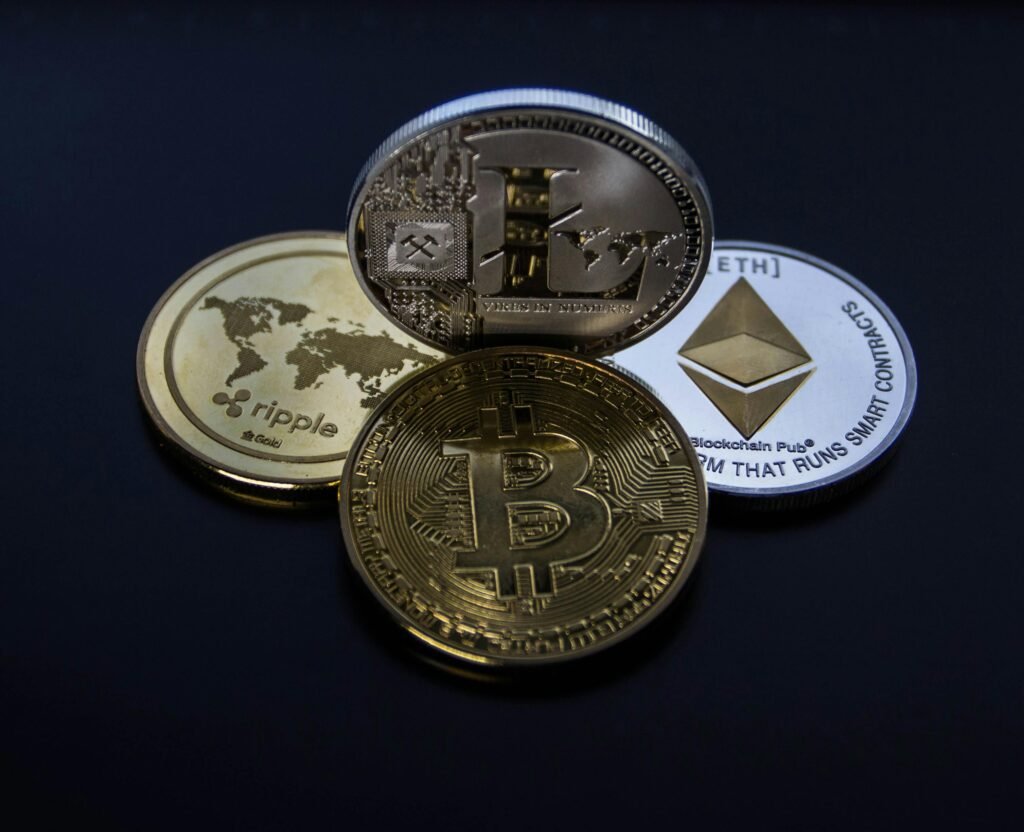
Bitcoin
Created by a person or group using the name Satoshi Nakamoto, Bitcoin was designed as a peer-to-peer digital currency. Its supply is capped at 21 million coins, which is why it is often compared to digital gold.
Ethereum
Ethereum is a blockchain that supports smart contracts, which are programs that run automatically when conditions are met. Many apps, tokens and decentralised finance services are built on it.
Stablecoins
These are tokens designed to track the value of a currency such as the US dollar. They are used for trading and transfers. Their stability depends on how well the issuer backs them, so quality varies.
Other coins
Thousands of other coins exist, including ones aimed at faster payments or specific applications. Many have little real use, and some disappear entirely.
Why people use crypto
- Cross-border transfers that can be faster or cheaper than some bank routes.
- Access to financial services without a traditional bank account.
- Speculation, meaning buying in the hope that the price rises.
- Building apps and services on open blockchains.
For many people, speculation is the main reason to buy, and it is also where many losses happen.
The risks you need to understand
- Price volatility: prices can rise or fall sharply in a short time. A drop of 50% or more has happened more than once in crypto’s history.
- Scams and fraud: fake exchanges, fake giveaways, impersonators and promises of guaranteed returns are common.
- Security: exchanges can be hacked, and lost private keys mean lost funds.
- Limited protection: bank deposit insurance and similar protections usually do not apply to crypto holdings.
- Regulation and tax: rules vary by country, change often and can affect how you may buy, hold and report crypto.
A simple example of volatility: if you put in 1,000 and the price falls 50%, you have 500. To get back to 1,000 you would need a gain of 100%, not 50%. Losses hurt more than the headline percentage suggests.
Is crypto the future of money or just hype?
Both views have some truth. Blockchain technology has real uses, and some people rely on crypto for payments and transfers. But most coins swing in price too much to work well as everyday money, and many projects fail. Nobody can reliably predict which will last. Treat any confident prediction, in either direction, with suspicion.
Holding crypto: exchange or your own wallet?
When you buy crypto on an exchange, the exchange usually holds the keys for you, which is convenient but means you rely on the company. Moving coins to a wallet you control gives you full ownership, but also full responsibility for keeping the recovery phrase safe. Many people use a mix, keeping small amounts for trading on an exchange and longer-term holdings in their own wallet. Neither is perfect, so choose based on how much you hold and how comfortable you are with the technical side.
Practical rules for beginners
- Only consider money you can afford to lose completely.
- Learn how wallets, keys and exchanges work before you buy.
- Use well-known, regulated platforms where available in your country.
- Enable two-factor authentication and keep recovery phrases offline.
- Ignore anyone promising guaranteed profits or asking for your keys.
- Spread risk instead of putting all your savings in one coin.
- Check the local tax rules and keep records of every transaction.
Key takeaways
- Cryptocurrency is digital money recorded on a blockchain rather than at a bank.
- Bitcoin was first, Ethereum added smart contracts, and stablecoins aim to hold a steady value.
- Volatility, scams and lost keys are the main dangers.
- Rules and protections differ by country, so check yours.
- Never invest more than you can afford to lose.
FAQ
Is cryptocurrency legal?
It depends on the country. Many countries allow it with rules on exchanges and tax, while some restrict or ban parts of it. Check your local regulator.
Who controls Bitcoin?
No single company or government does. The network is run by many participants following shared rules, though large holders and developers can still have influence.
Is crypto safe to invest in?
It is high risk. Prices are volatile, scams are common and protections are limited, so it is suited only to money you can afford to lose.
This article is for general education and is not personal financial advice.