
How to Earn Cryptocurrency: 6 Ways and Their Risks
You can earn cryptocurrency without simply buying and hoping the price rises. The main routes are mining, staking, lending, getting paid in crypto for work, playing blockchain games and earning rewards from platforms. Each one has real costs and risks, and none of them is guaranteed income. Here is how each works, who it suits and what can go wrong.
1. Mining
Mining is how some blockchains, such as Bitcoin, confirm transactions. Miners use powerful computers to compete to add the next block, and the winner receives newly issued coins plus transaction fees.
- Best for: people with technical skill, access to cheap electricity and a willingness to invest in equipment.
- Costs: specialised hardware, electricity, cooling and maintenance.
- Risks: rising competition and difficulty can shrink returns, and a fall in the coin’s price can turn profit into loss.
A simple check: if your equipment earns 5 a day in coins but electricity and running costs are 6 a day, you are losing 1 a day before counting the purchase price. For most individuals, mining the largest coins is no longer practical at home.
2. Staking
Some blockchains, such as Ethereum, use proof of stake. Holders lock up coins to help validate transactions and receive rewards in return.
- Best for: long-term holders who already own the coin and are comfortable locking it up.
- Rewards: paid in the same coin, so their value rises and falls with the market price.
- Risks: lock-up periods, possible penalties if a validator misbehaves, platform failure and price drops.
If you stake 1,000 worth of a coin at an advertised 5% annual reward, you would earn about 50 worth of coins in a year, if the price stayed the same. If the price fell 30%, your total value would still be lower despite the rewards. Advertised rates change and are not guaranteed.
3. Lending and yield products
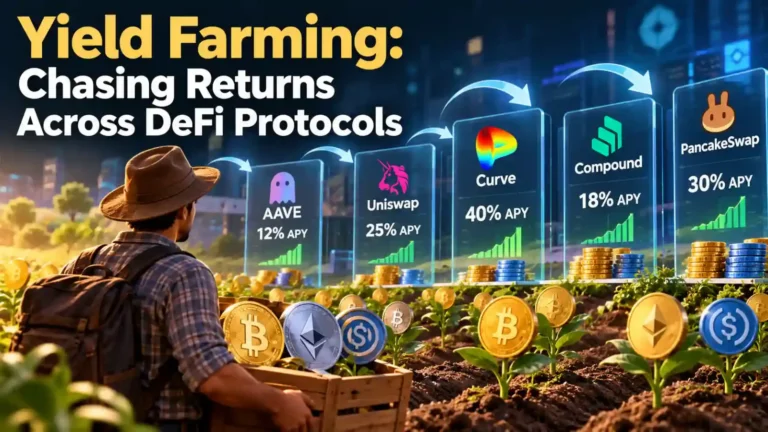
Some platforms let you lend crypto and earn interest, and decentralised finance (DeFi) services let you provide liquidity in exchange for fees or rewards.
- Best for: experienced users who understand how the platform works.
- Risks: the platform or borrower may fail and take your funds with it, smart contracts can contain bugs, and very high advertised yields often signal very high risk. Several well-known crypto lenders have collapsed in the past, and customers lost money.
Treat any yield that looks far above normal savings rates as a warning sign, and never lend more than you can afford to lose.
4. Getting paid in crypto for work
Freelancers, developers, writers and designers can ask clients to pay in crypto, and some employers offer it. Others earn bounties for finding bugs or completing tasks for blockchain projects.
- Best for: people who already have a marketable skill.
- Risks: price swings between the time you invoice and the time you cash out, and tax rules that may treat the payment as income at its value on the day you receive it.
If you want to avoid volatility, you can convert payments to local currency quickly.
5. Play-to-earn and blockchain games
Some games reward players with tokens or digital collectibles that can be sold. This became popular after a few early successes.
- Best for: gamers who would play anyway and treat rewards as a bonus.
- Risks: many games depend on a constant flow of new players, token values can collapse, and some require an upfront purchase. Time spent may earn less than a basic hourly wage.
6. Rewards, airdrops and cashback
Some exchanges, wallets and apps give small amounts of crypto for completing tasks, learning modules or using a service. Projects also sometimes give free tokens, called airdrops, to early users.
- Best for: beginners who want small exposure at little cost.
- Risks: this is where many scams hide. Fake airdrops and wallet-connect prompts are designed to drain your funds. Never share your recovery phrase and avoid unknown links.
Comparing the options
| Method | Upfront cost | Skill needed | Main risk |
| Mining | High | High | Costs exceed rewards |
| Staking | Need existing coins | Medium | Price falls, lock-ups |
| Lending / yield | Need existing coins | Medium to high | Platform failure |
| Paid work | None | Depends on skill | Price swings, tax |
| Play-to-earn | Low to medium | Low | Token collapse |
| Rewards | None | Low | Scams |
Tax and safety basics
In many countries, crypto you earn counts as taxable income, and selling or swapping it can trigger further tax. Rules differ widely and change, so check the current rules where you live and keep records of dates, amounts and values.
- Use a reputable platform and turn on two-factor authentication.
- Store recovery phrases offline and never share them.
- Be sceptical of anything promising guaranteed or unusually high returns.
- Start small while you learn.
Key takeaways
- You can earn crypto through mining, staking, lending, work, games and rewards.
- Every method involves costs and risk, and returns are never guaranteed.
- Rewards paid in a coin rise and fall with that coin’s price.
- Unusually high yields usually mean high risk, and scams are common.
- Keep records for tax, and only commit money you can afford to lose.
FAQ
What is the easiest way to earn crypto as a beginner?
Small rewards from reputable platforms or being paid in crypto for work you already do are the simplest, because they need no upfront investment.
Is staking safe?
It is not risk free. You face price risk, lock-up periods and platform or technical risk, so understand the terms before you stake.
Do I pay tax on crypto I earn?
In many countries, yes. The rules vary, so check with your tax authority or a qualified adviser.
This article is for general education and is not personal financial advice.