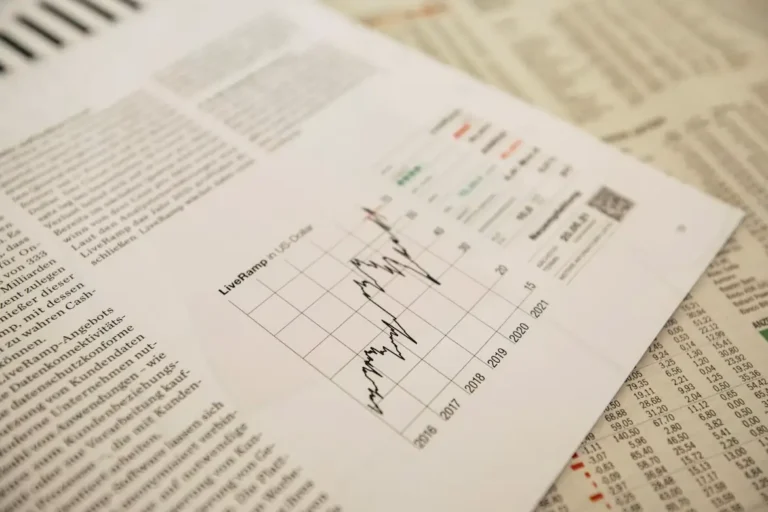

What Is a Bull Market? Recognizing One Doesn’t Mean You Can Predict Its End
A bull market refers to a sustained period during which stock prices, or a broader market index, are generally rising, typically accompanied by investor optimism, strong economic conditions, and growing confidence in continued growth. While there’s no single universally agreed technical threshold, a commonly cited informal benchmark defines a bull market as a rise of 20% or more from a recent low, sustained over a meaningful period rather than a brief, short-lived rally.
The term draws its imagery from how a bull attacks, thrusting its horns upward, a visual shorthand for a rising market, just as “bear market” draws from a bear’s downward-swiping motion.
What actually drives a bull market
Bull markets are generally associated with a combination of favorable conditions: strong corporate earnings growth, low or falling interest rates (which make borrowing cheaper and make stocks relatively more attractive compared to fixed-income alternatives), positive economic indicators like GDP growth and low unemployment, and generally optimistic investor sentiment that reinforces itself as rising prices attract more buyers, at least until valuations stretch too far relative to underlying fundamentals.
Why bull markets can feel deceptively safe
One of the more psychologically tricky aspects of a sustained bull market is that it tends to make risk feel smaller than it actually is. As prices rise steadily over an extended period, investors who haven’t experienced a serious downturn during that stretch can develop a false sense of confidence, sometimes taking on more risk (higher exposure to volatile assets, more leverage, less diversification) than they’d genuinely be comfortable with once conditions eventually turn. This isn’t a flaw unique to any particular type of investor; it’s a well-documented behavioral pattern that tends to repeat across market cycles.
Trying to predict when a bull market will end is genuinely difficult
Financial history is full of confident predictions about exactly when a bull market would peak, and most of them have been wrong, sometimes by years. Markets can continue rising well beyond what many observers consider “reasonable” valuations, and conversely, downturns can arrive suddenly, triggered by events that weren’t widely anticipated in advance. This is the practical basis for the common advice against trying to time market entry and exit precisely around perceived bull market peaks; a disciplined, long-term investment approach (like continuing SIP contributions through different market phases) has generally proven more reliable for most individual investors than attempting to call market tops and bottoms.
Bull markets versus bull runs in specific sectors
Sometimes “bull market” is used more narrowly to describe a strong, sustained rise in a specific asset class, sector, or even a single stock, rather than the broader market as a whole. It’s possible for a specific sector to be in a strong bull run while the broader market is flat or declining, and vice versa, which is why it’s worth being clear about the specific scope, an entire market index, a sector, or a single security, when the term comes up in financial commentary.
What eventually ends a bull market
Bull markets have historically ended for various reasons: an economic slowdown or recession, a sharp rise in interest rates that makes borrowing more expensive and alternatives more attractive, a specific triggering event (a financial crisis, a geopolitical shock, or a sudden shift in investor sentiment), or simply valuations becoming stretched enough that a correction becomes the natural response. There’s no single, reliable early-warning signal that consistently predicts the transition in advance, which is a genuine, well-documented limitation of even sophisticated market analysis.
Bottom Line
A bull market describes a sustained, broadly rising market environment associated with optimism and strong conditions, but recognizing that one is underway doesn’t translate into a reliable ability to predict exactly when it will end. For most long-term investors, staying invested through a full market cycle, rather than attempting to precisely time an exit near the top, has generally proven the more dependable approach.
This article is for general information and isn’t personalized investment advice.
Sources
- SEBI – Investor Education on Market Cycles