
AI & TECH
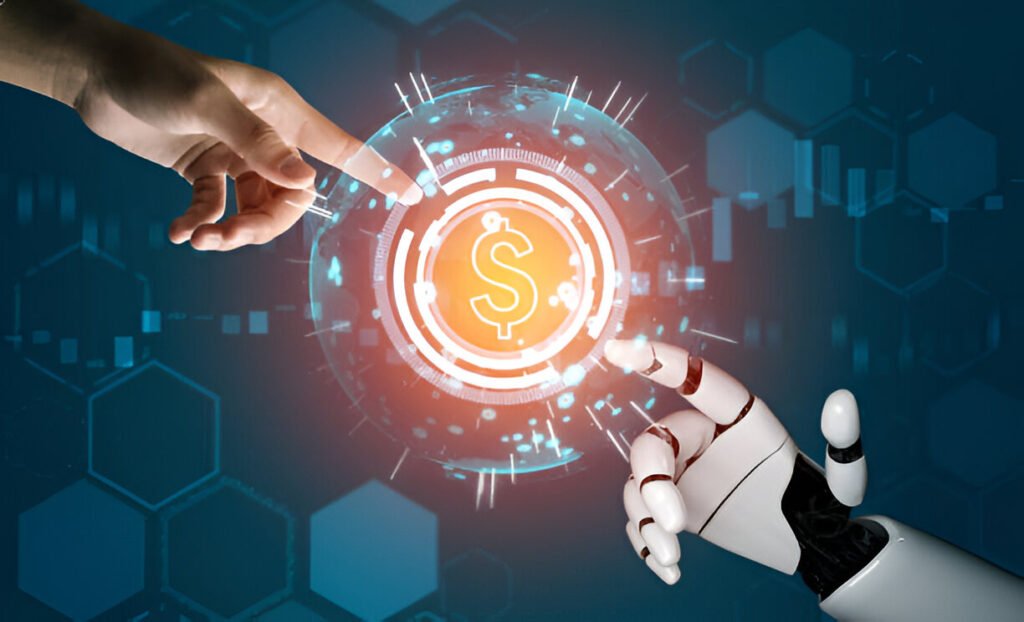
Artificial intelligence and related technology are changing finance in several concrete ways: how investments are managed, how fraud is caught, how banks serve customers and how loans are approved. Below are the main uses of AI in finance, what they mean for ordinary people, and the risks to keep in mind.
AI systems can process huge amounts of data far faster than a person, looking for patterns in prices, company reports and economic indicators. Large trading firms use algorithms to execute orders in fractions of a second, and some funds use machine learning to help decide what to buy and sell.
For individuals, the most visible example is the robo-advisor. You answer questions about your goals, time horizon and comfort with risk, and the service builds and rebalances a diversified portfolio of funds for a modest fee. This makes disciplined investing available to people with small balances.
A caution: AI does not remove market risk. Models trained on past data can fail when conditions change, and no tool predicts the future reliably. Be sceptical of any product that promises guaranteed returns from AI.
Banks and card networks use machine learning to score transactions in real time. A model learns what normal behaviour looks like for you, such as typical amounts, locations and merchants, and flags anything unusual. If you have ever received a text asking whether a purchase was yours, that was probably an automated check.
This catches many fraud attempts before money leaves the account. The downside is false alarms, where a legitimate payment is blocked. Keeping your contact details current and responding to alerts quickly helps. Criminals use AI too, for example to write convincing phishing messages or imitate voices, so never share one-time codes or passwords, whoever appears to be asking.
Chatbots and virtual assistants now handle routine tasks such as checking balances, explaining charges and setting up transfers. Some apps analyse your spending, group it into categories and suggest ways to save or warn you about upcoming bills.
The benefits are speed and availability at any hour. The limits are that bots can misunderstand complex problems, so it is worth knowing how to reach a human when something is serious.
Lenders increasingly use data models to estimate the chance that a borrower will repay. Faster decisions can mean quicker access to credit and, in some cases, approval for people with limited credit history. The risk is bias: if models learn from skewed data, they can treat groups unfairly or make decisions that are hard to explain. Some regulators expect lenders to be able to explain automated decisions, and you can often ask for a review.
Much of finance is paperwork: reconciling accounts, checking identities, reviewing contracts and monitoring transactions for money laundering. AI tools automate parts of this work, reducing costs and errors. These savings can eventually show up as lower fees, though that is not guaranteed.
Suppose you invest 10,000 through a robo-advisor charging 0.25% a year, or in a traditional managed fund charging 1.5% (both rates are illustrative). In the first year the fees are 25 versus 150, a gap of 125, and that gap compounds as the balance grows. Lower costs do not guarantee better returns, but fees are one of the few things you can control. The same logic applies to every AI-driven product: ask what it costs, what it actually does, and what happens when it gets something wrong.
Routine tasks such as data entry, basic reporting and first-line queries are the easiest to automate. Roles that involve judgement, relationships and explaining complex choices to clients remain important, and many jobs are shifting toward overseeing and checking automated systems. For anyone working in or near finance, comfort with data and technology is becoming a baseline skill.
Neither is always better. Robo-advisors are cheap and simple for standard goals. Human advisers add value for complex situations such as tax planning or business ownership.
Not reliably. AI can find patterns and speed up analysis, but markets are affected by unpredictable events and by other participants reacting to the same tools.
It can be, if the app is from a regulated, reputable provider, uses strong security and requests only the permissions it needs. Read the privacy terms and revoke access you no longer use.
This article is for general education and is not personal financial advice.

We use cookies for site analytics and to show ads through Google AdSense. You can accept all, reject non-essential cookies, or choose what to allow. See our Privacy Policy for details.